Flute Mic Clamps for the NUX B-6
3D printed clamps that mount a NUX B-6 Pro wireless saxophone mic onto bamboo and metal flutes. Five clamp sizes, ten TPU spacers, quick-swap between songs.
Context
Nazm Anwr is an architect, a calligrapher, and the flute player for the Bangladeshi band Kaaktaal. We have known each other since university and we do each other favours. All sorts, in both directions, and nobody is keeping score.
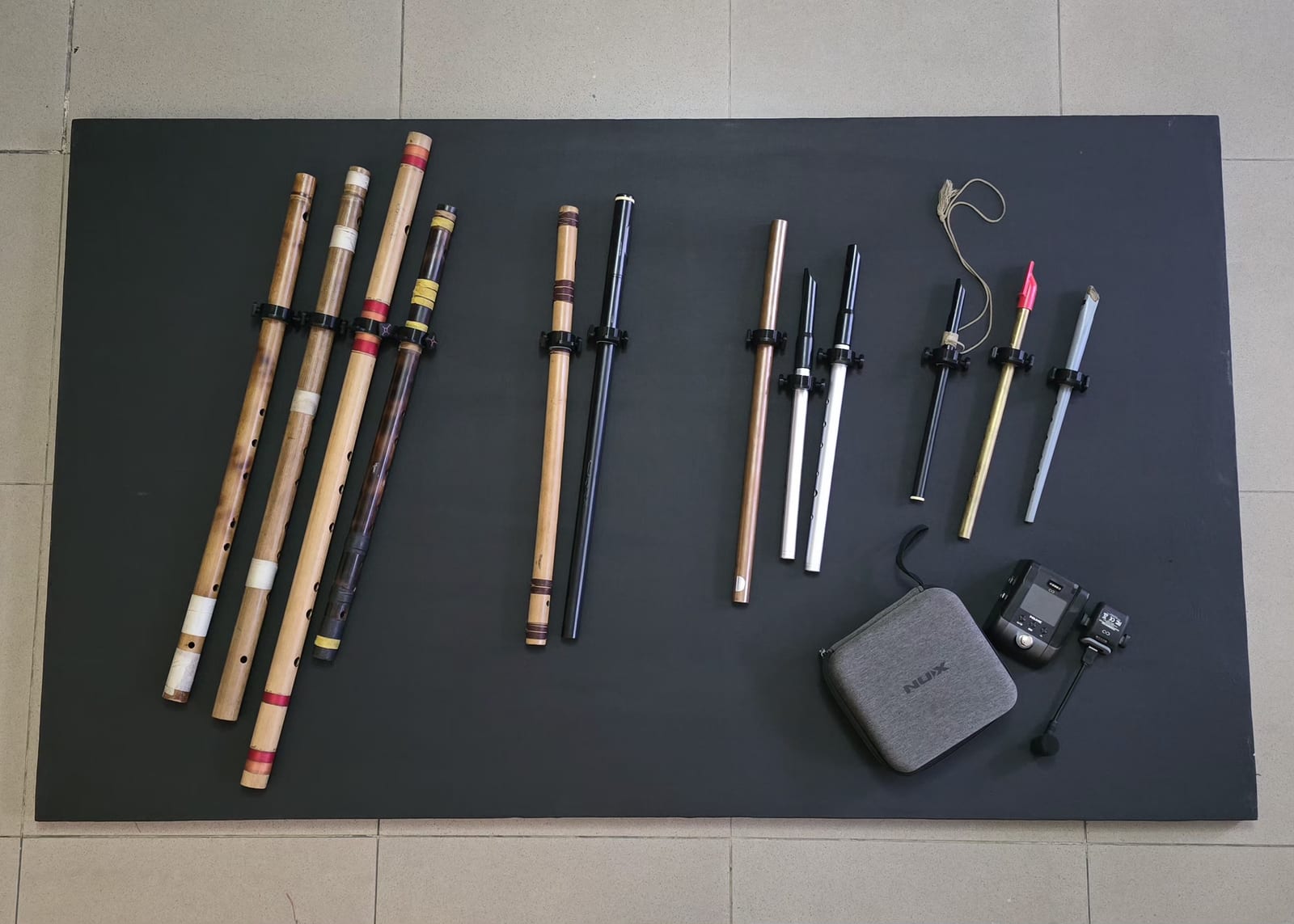
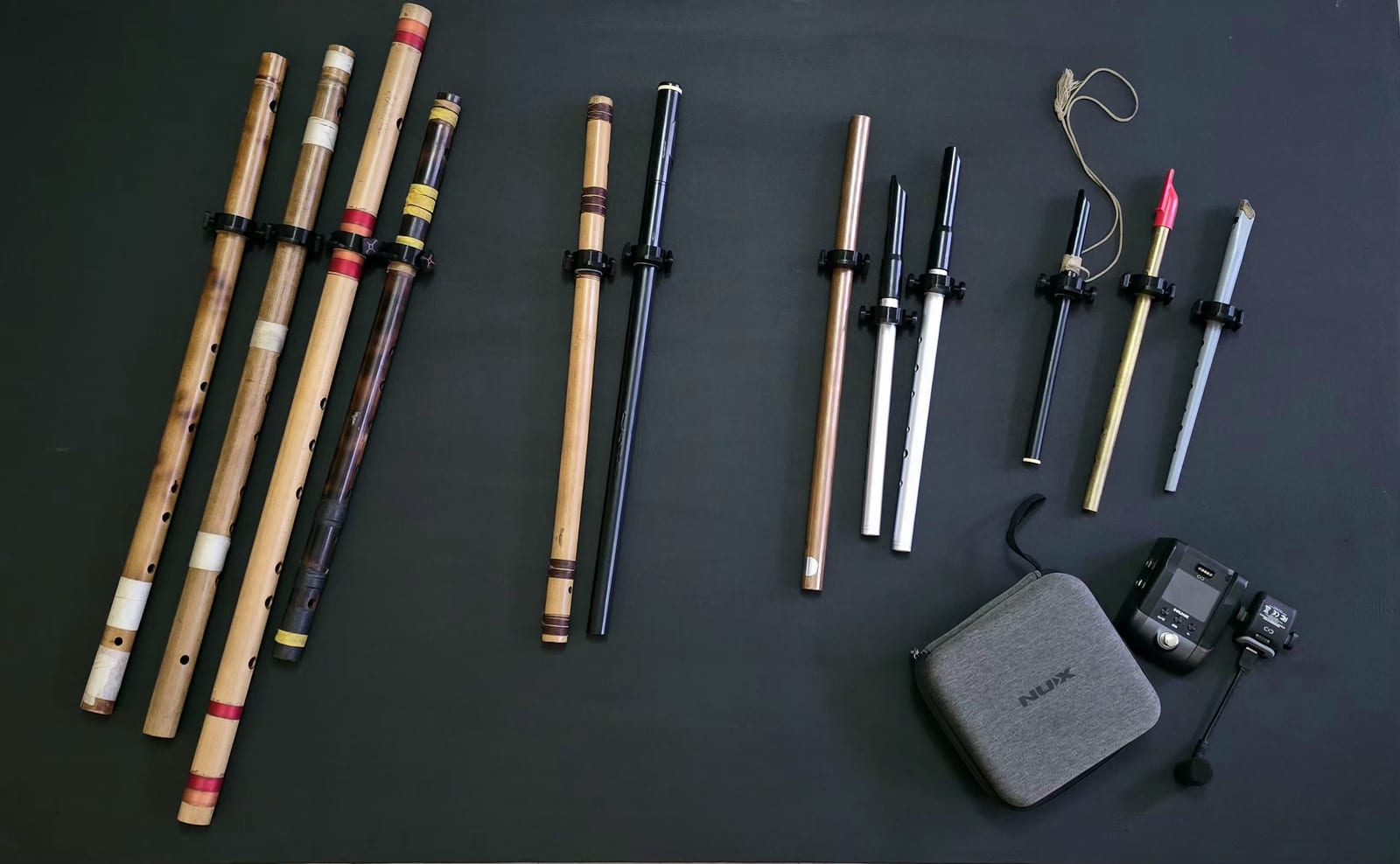
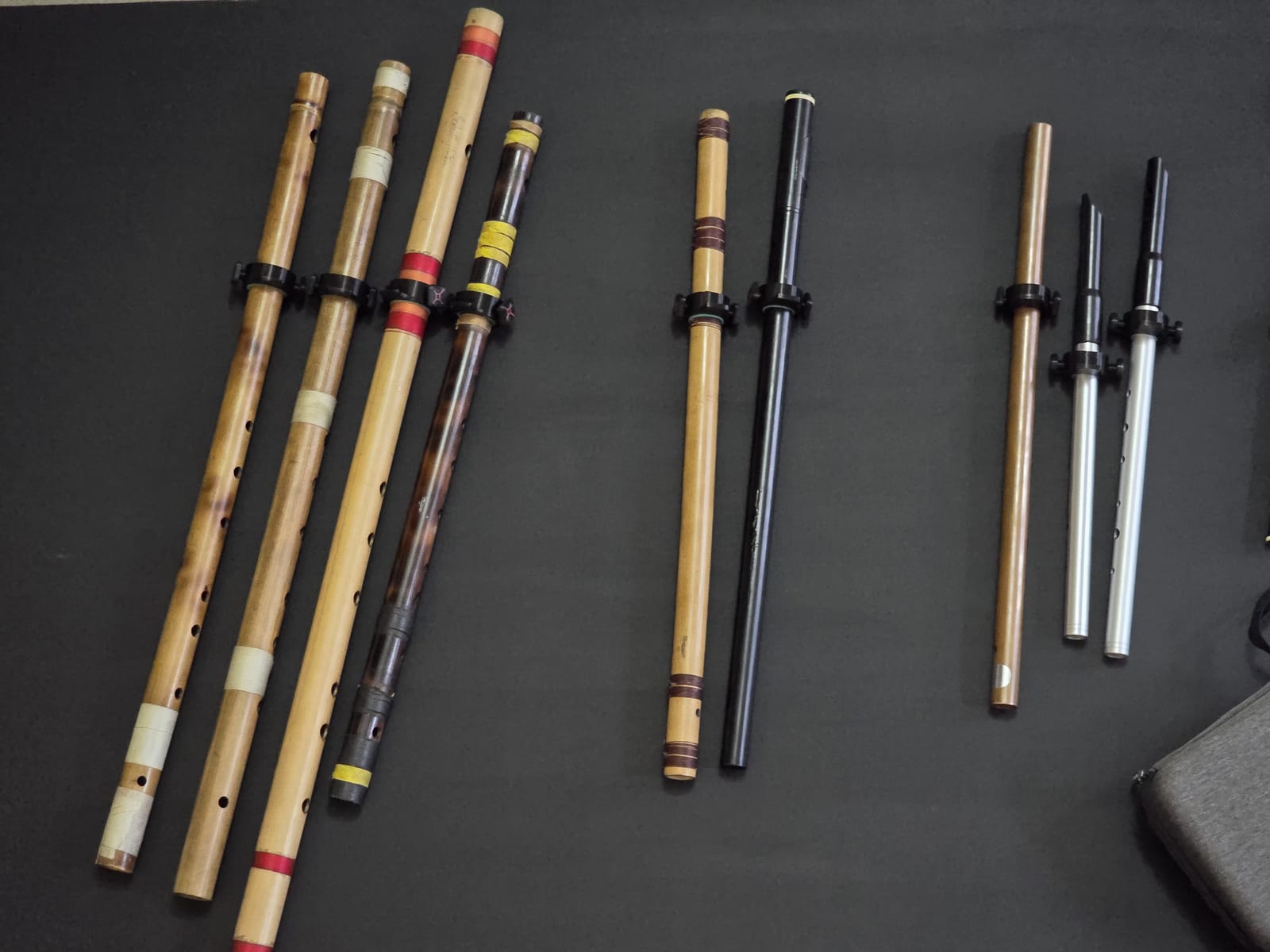
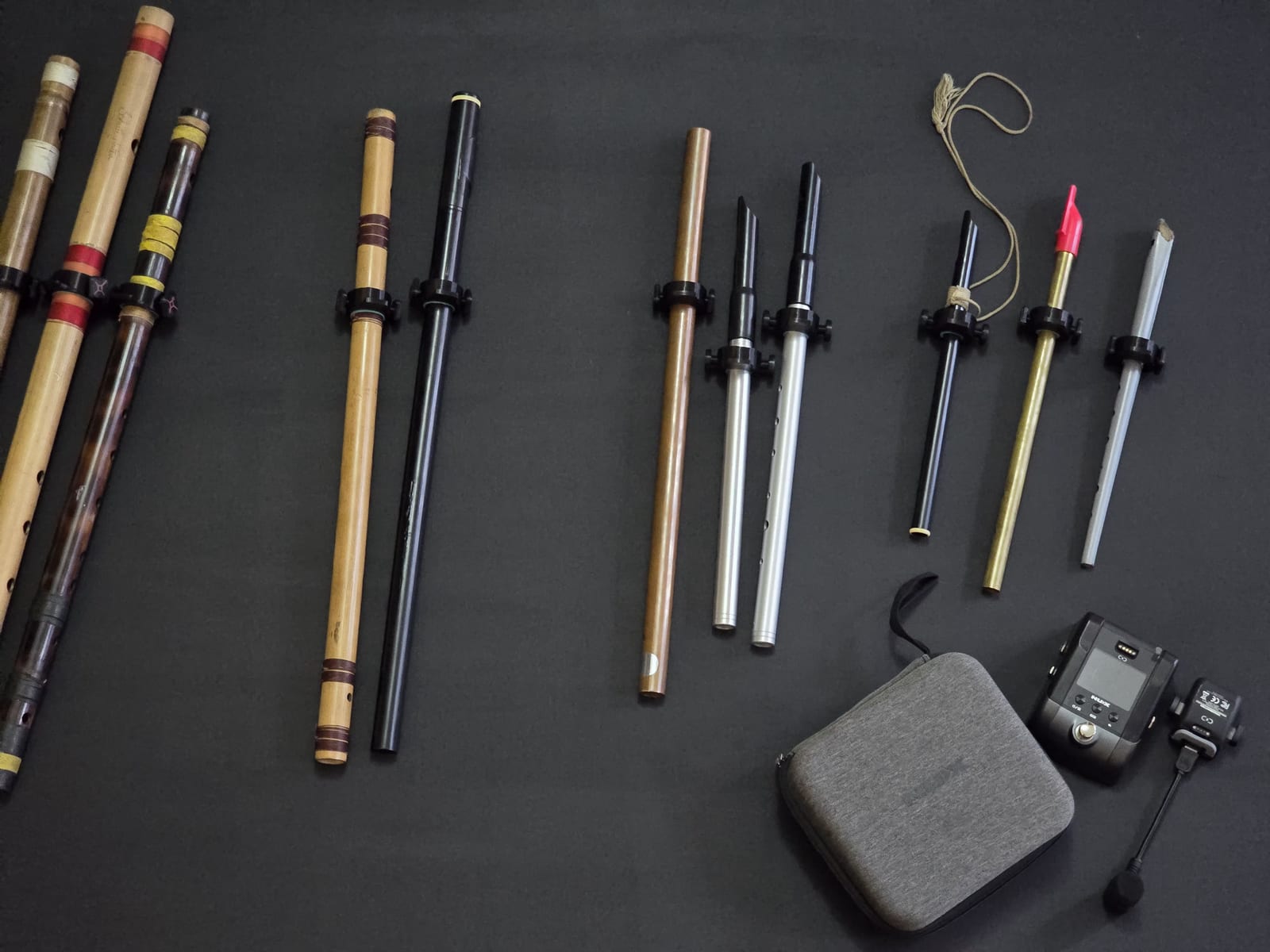
He owns more flutes than he performs with. Thirteen of them go out with him for a show, and they are not one instrument in different sizes. The largest is about three feet long and the smallest is a few inches. Some are bamboo, bound with thread and tape. The rest are metal or black resin: aluminium, copper, brass. Among them are a Tony Dixon DX207 in A and another in G, a Tony Dixon TB014 tenor flute, a Tony Dixon DX001 soprano whistle, a brass Generation whistle in Eb and a tin Clarke whistle in C. During a set he swaps between them, and he does not stand still while he plays. He walks the stage.
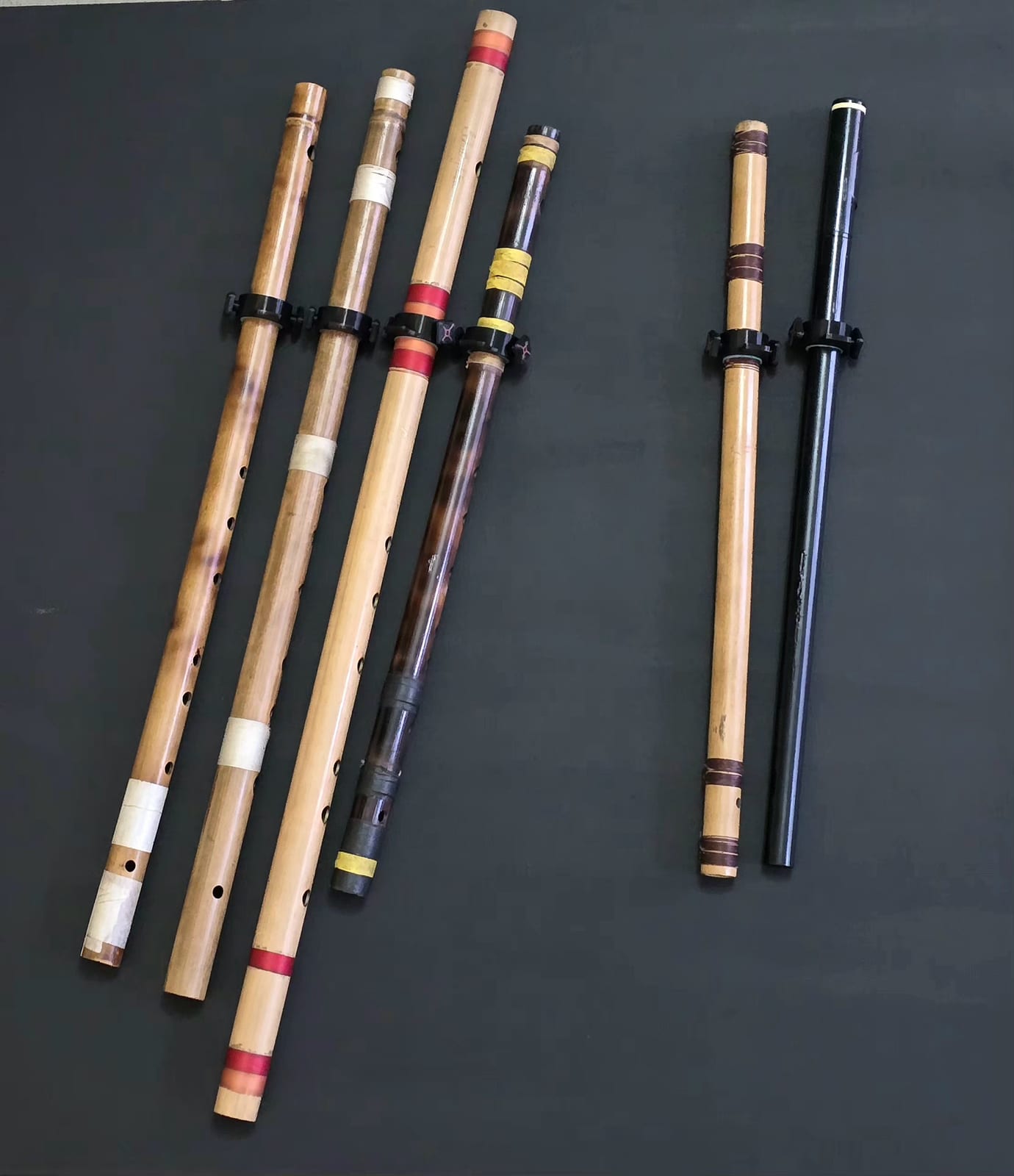
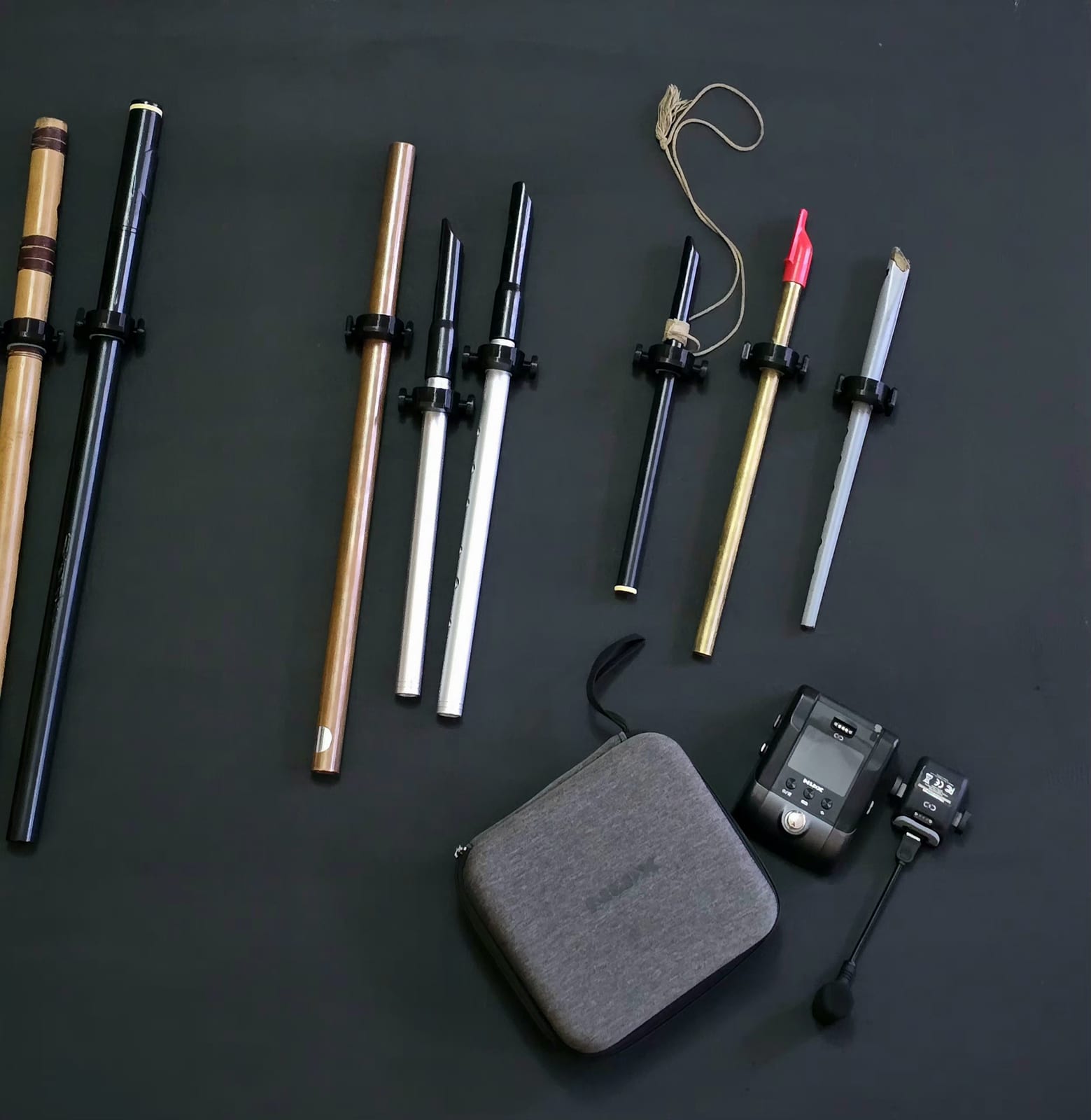
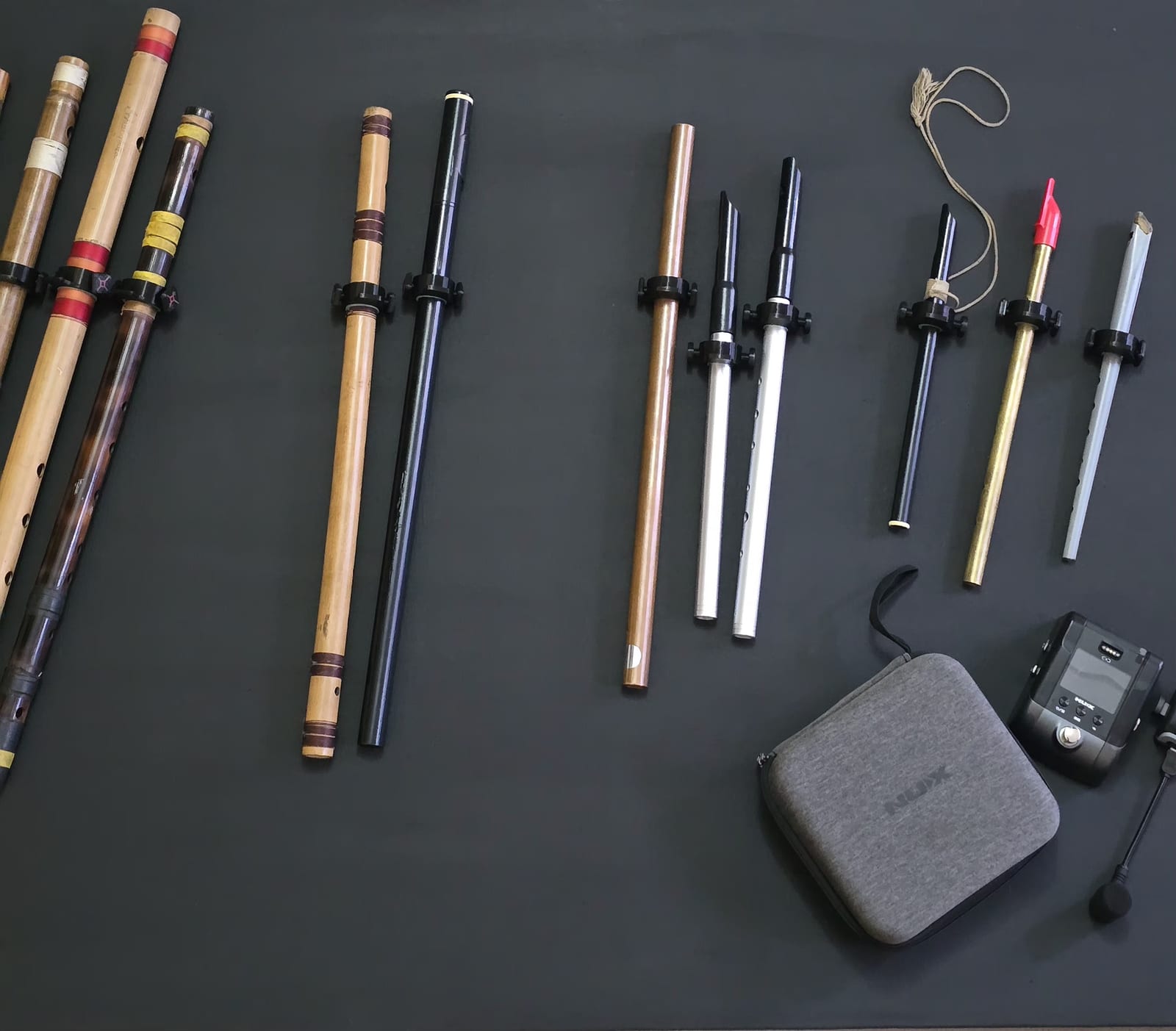
A saxophone mic on a flute
Traditional flutes have no good microphone options. There is no pickup built in, nothing to clip to, and no standard mounting point anywhere on the body. A stand microphone would solve the audio and ruin the performance, because he would have to stay in front of it.
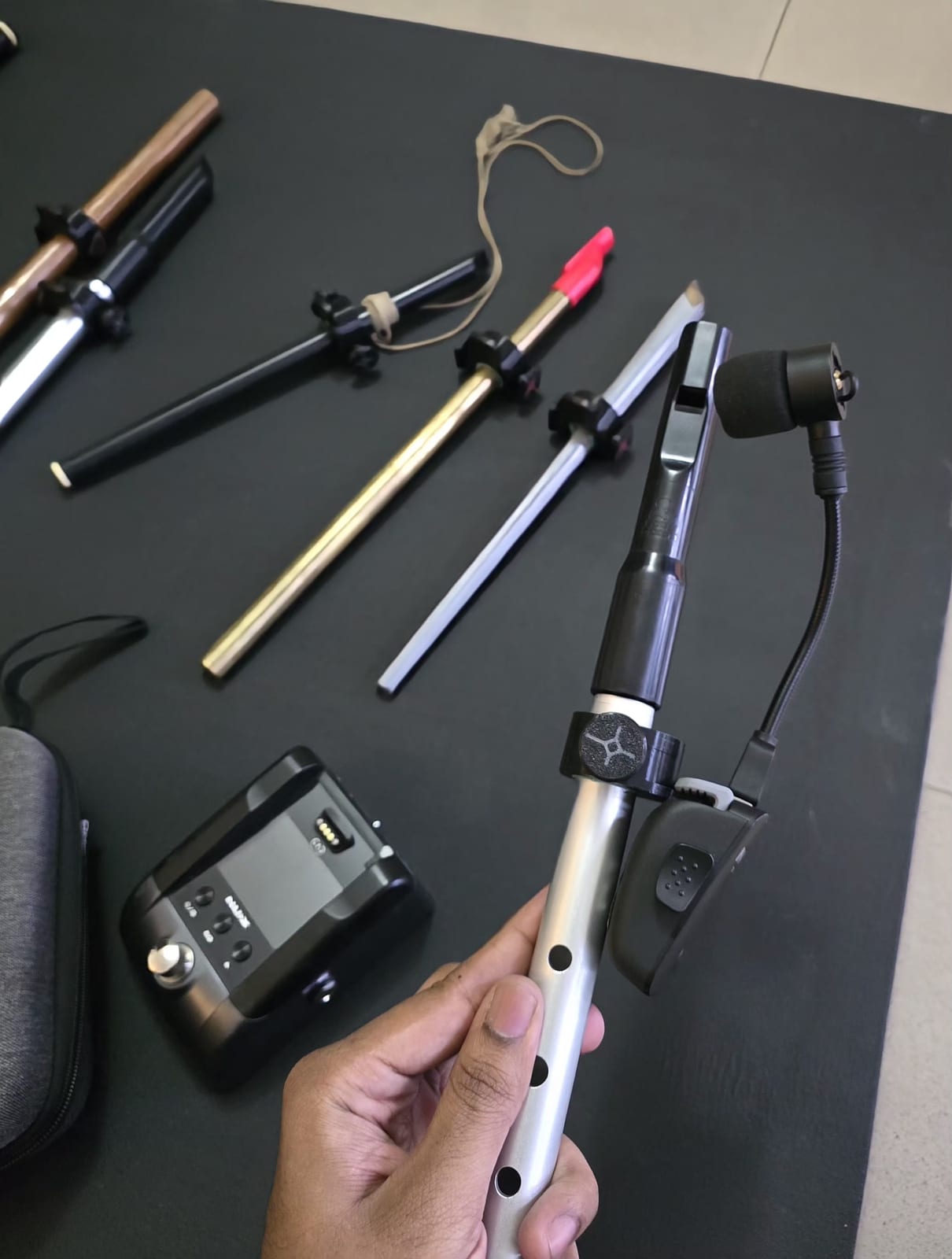
He had already bought the hardware: a NUX B-6 Pro, the wireless mic system sold for saxophone. The B-6 clamps onto the bell of a sax, which is a rigid flared metal mouth of one known size. A flute is a straight tube, and he owns more than a dozen across a range of diameters and several materials. The mic had no way to attach to any of them.
So the job had two halves that pull against each other. Whatever holds the mic has to grip hard enough that it will not rotate or creep during a song, on a surface that is smooth and slightly irregular. It also has to come off one flute and go onto the next in the gap between songs, by hand, in stage light, without tools.
What we made
Nazm is a maker himself, so this was a joint design session rather than a brief handed over. What we settled on was a clamp split into two layers that do two different jobs.
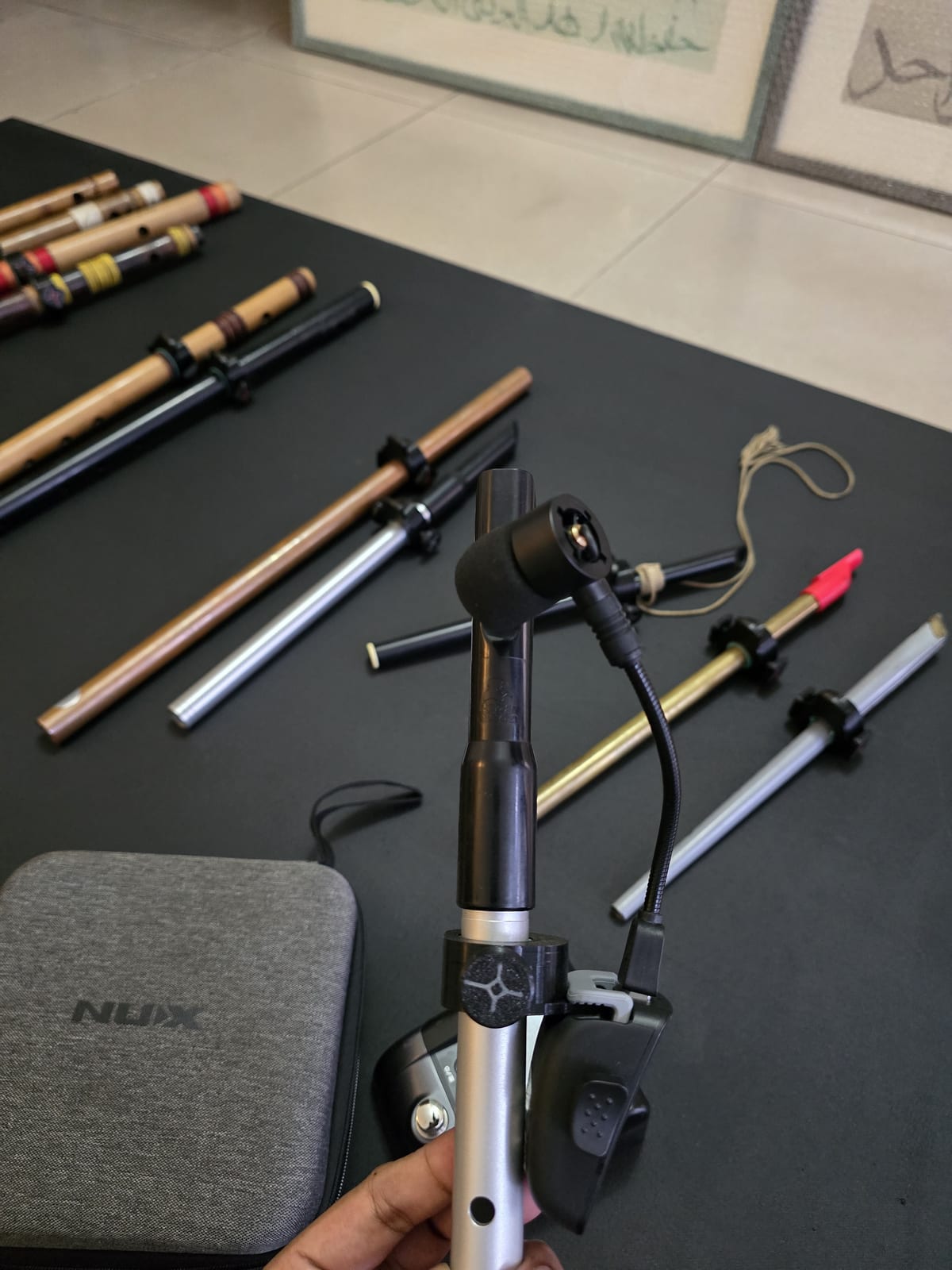
The outer layer is rigid, printed in PETG. It is a split ring with a boss on one side that reproduces the mount the B-6 expects to find on a saxophone, closed by a printed thumb screw that threads straight into the ring.
The inner layer is flexible, printed in TPU. It takes up the difference between the clamp bore and the actual flute, and it grips without marking the instrument. A rigid clamp tightened straight onto a bamboo flute would either slip or dent it, and onto a thin aluminium tube it would crush it. The TPU does the conforming so the PETG does not have to.
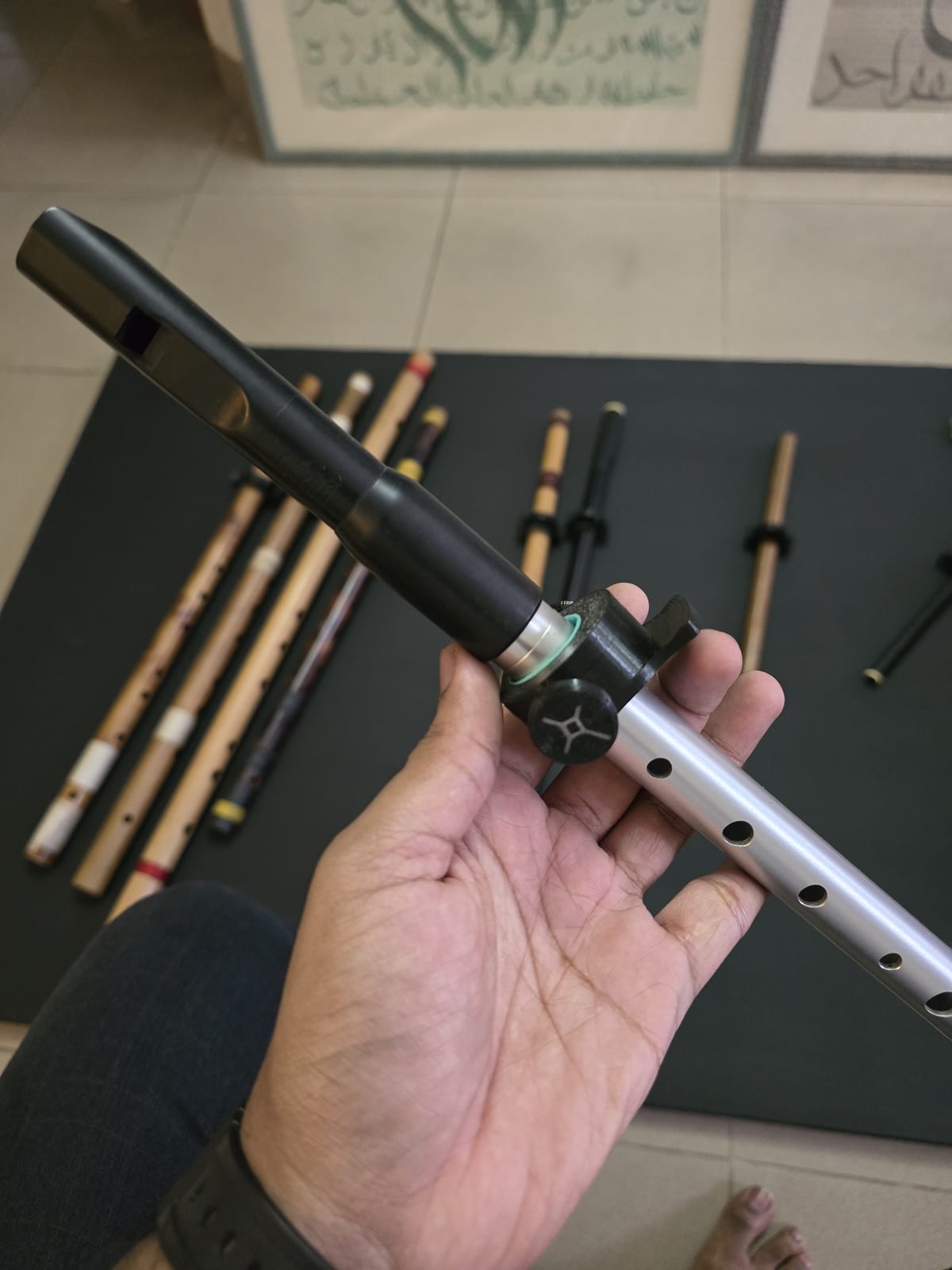
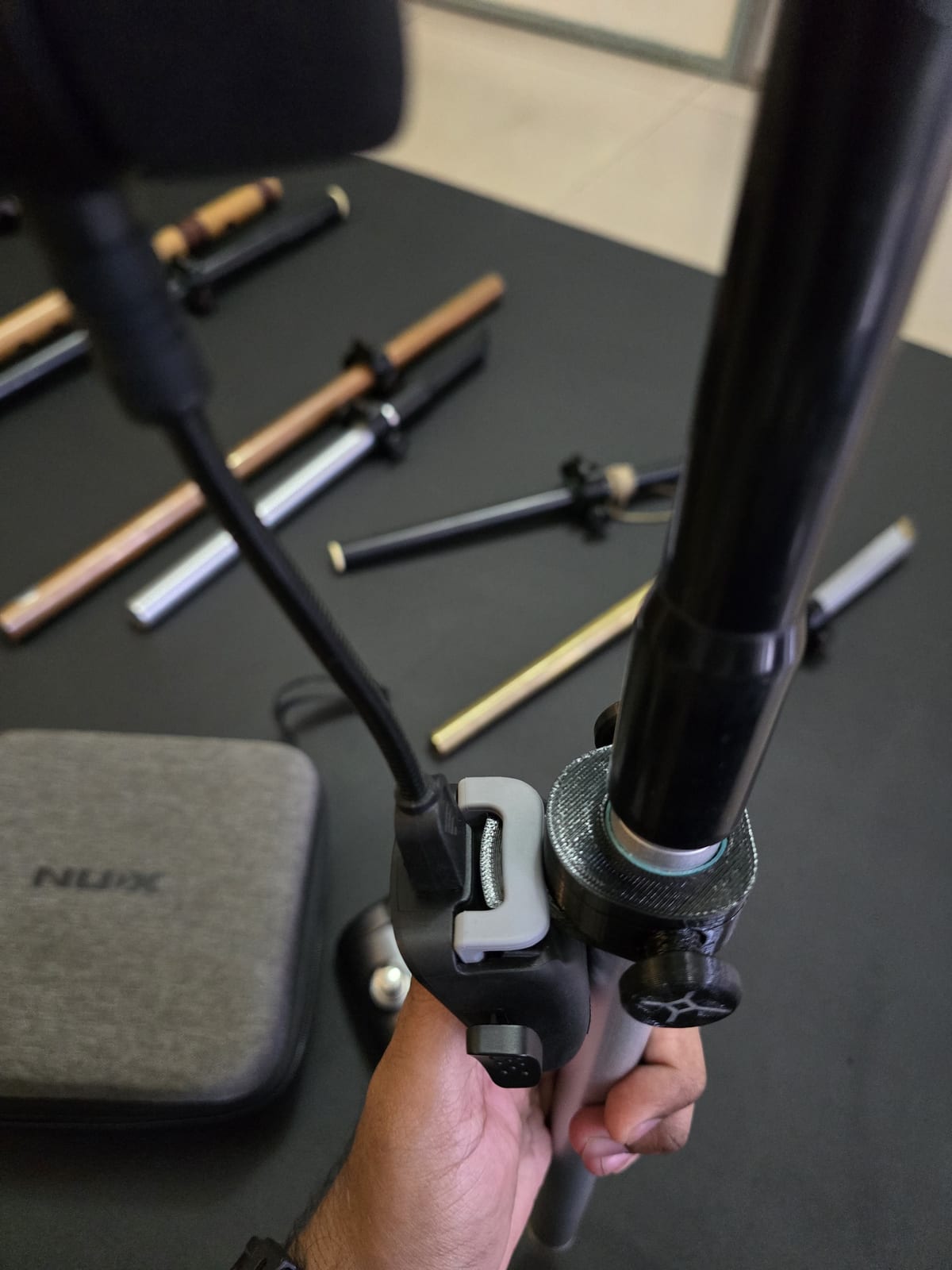
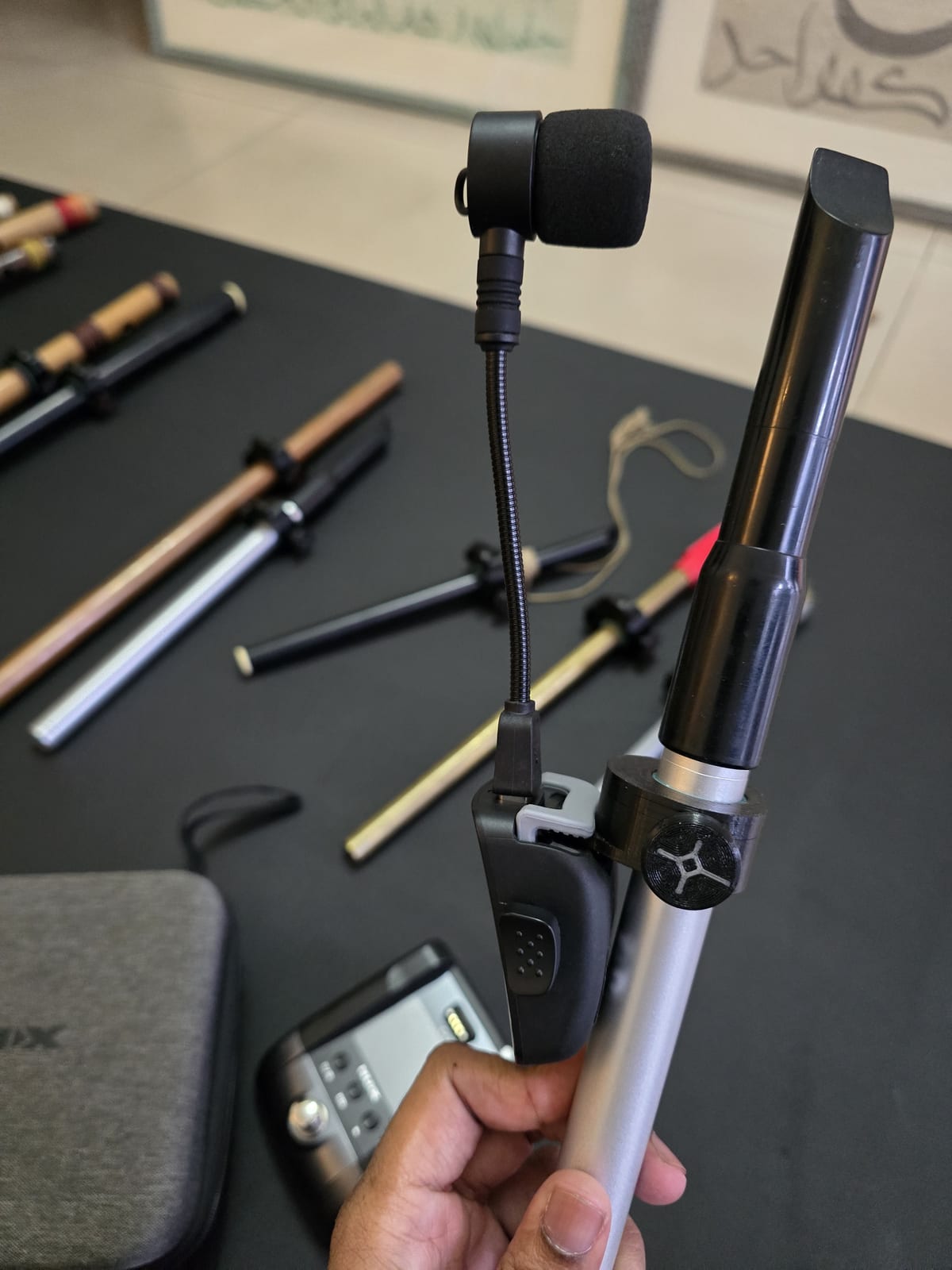
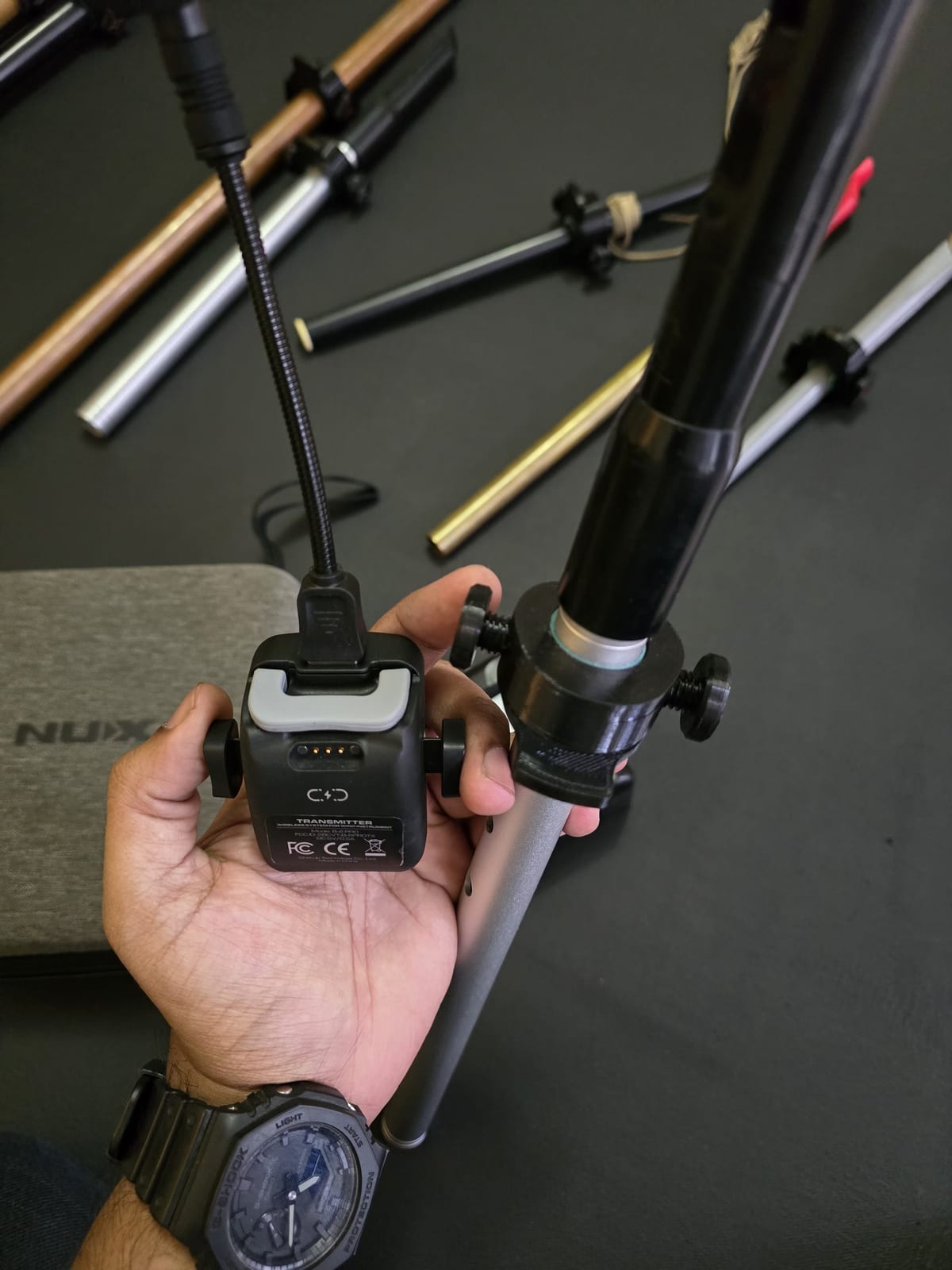
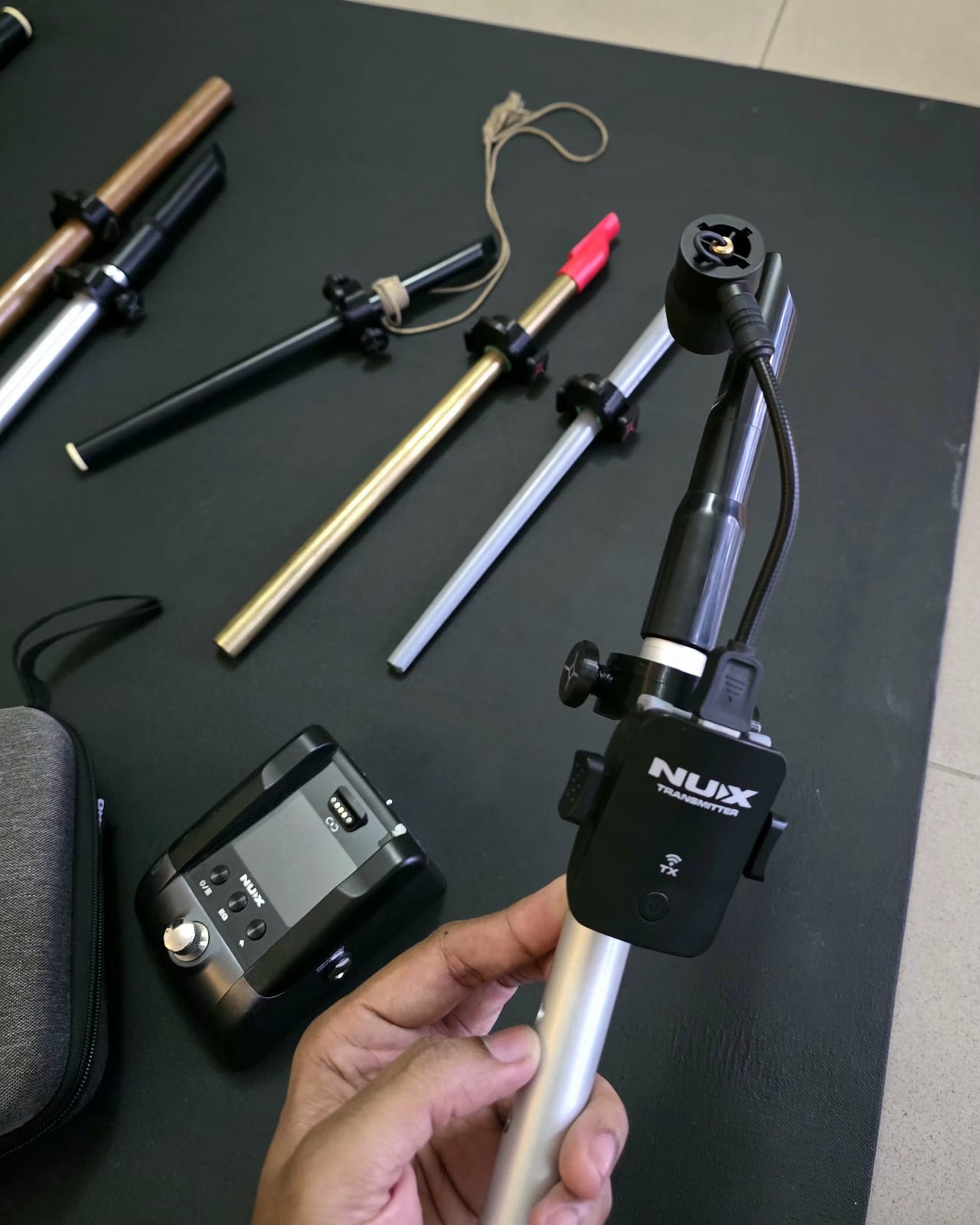
Splitting the two layers is what made the set tractable in a day. Instead of modelling thirteen bespoke clamps, we made five clamp sizes and a set of TPU spacers that step each clamp down to whichever flutes fall under it.
| Clamp bore | Spacer inner diameters |
|---|---|
| 22 mm | 15, 16, 20 |
| 24 mm | 22, 22.5 |
| 28 mm | 24.5, 26.5 |
| 30 mm | 27.5 |
| 35 mm | 30, 33 |
Five clamps, ten spacers. Everything printed, including the screws. Printed fasteners were not a purity exercise: it meant no hardware run on the day, nothing metal to lose in a green room, and a thumb screw big enough to turn by hand, which is the part that matters when the swap has to happen between songs.
Measure, fit, number
The part of the day that actually took the time was not the modelling. It was going through the collection one flute at a time with a pair of callipers, finding which clamp and which spacer it wanted, and writing the pairing down before it got lost.
We numbered the flutes and photographed each one as it was fitted, with the clamp size over the spacer size scrawled on the picture in red. The three largest bamboo flutes all take 35 over 33. The thin brass and grey metal ones come down to 22 over 15 and 22 over 16. A few are annotated with the measured diameter instead, 26.16 or 27.5, where the reading mattered more than the pair.
Several flutes turned out close enough in diameter to share a pairing, which is the reason five clamps and ten spacers cover thirteen instruments rather than needing one of each.
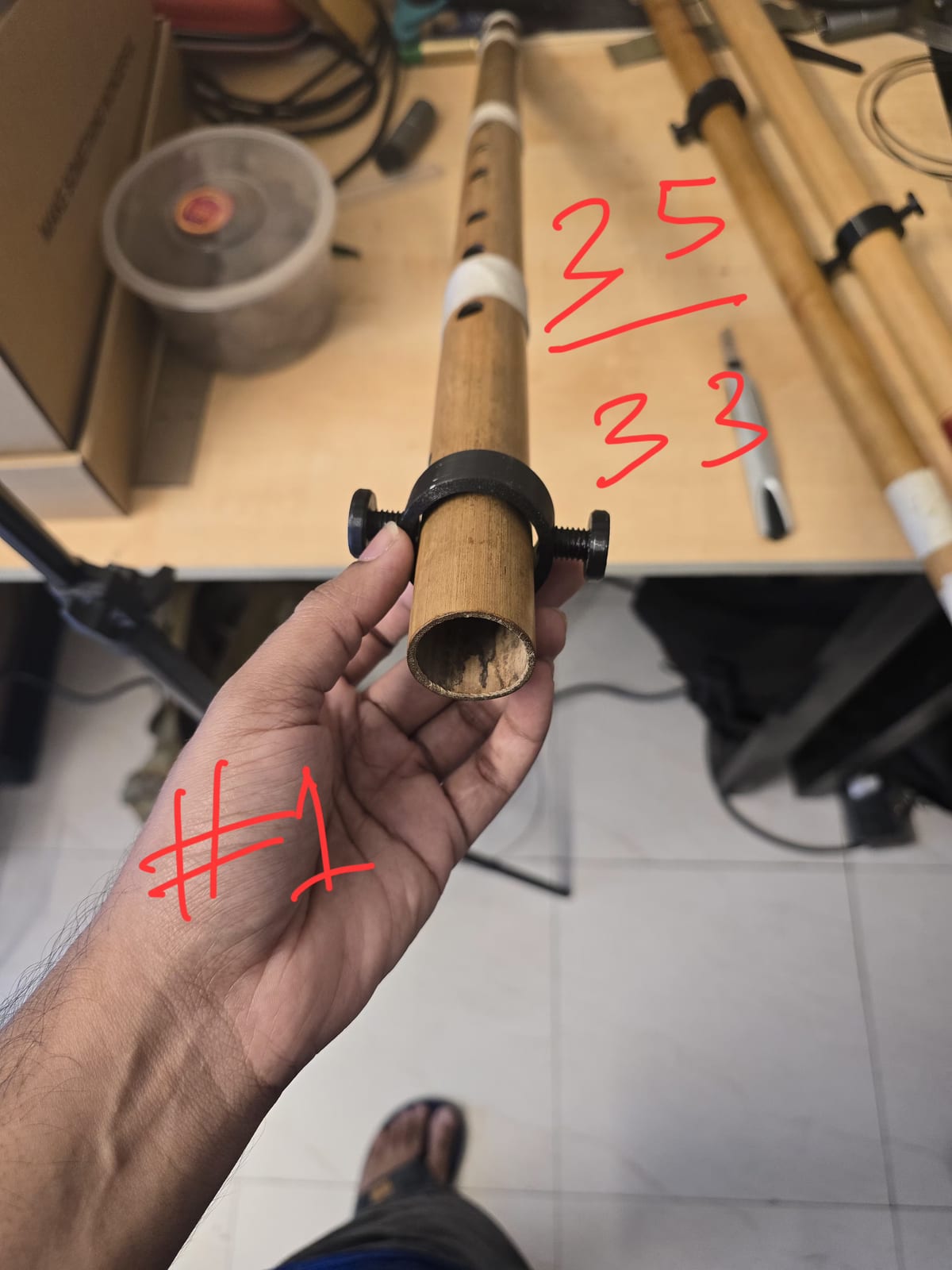
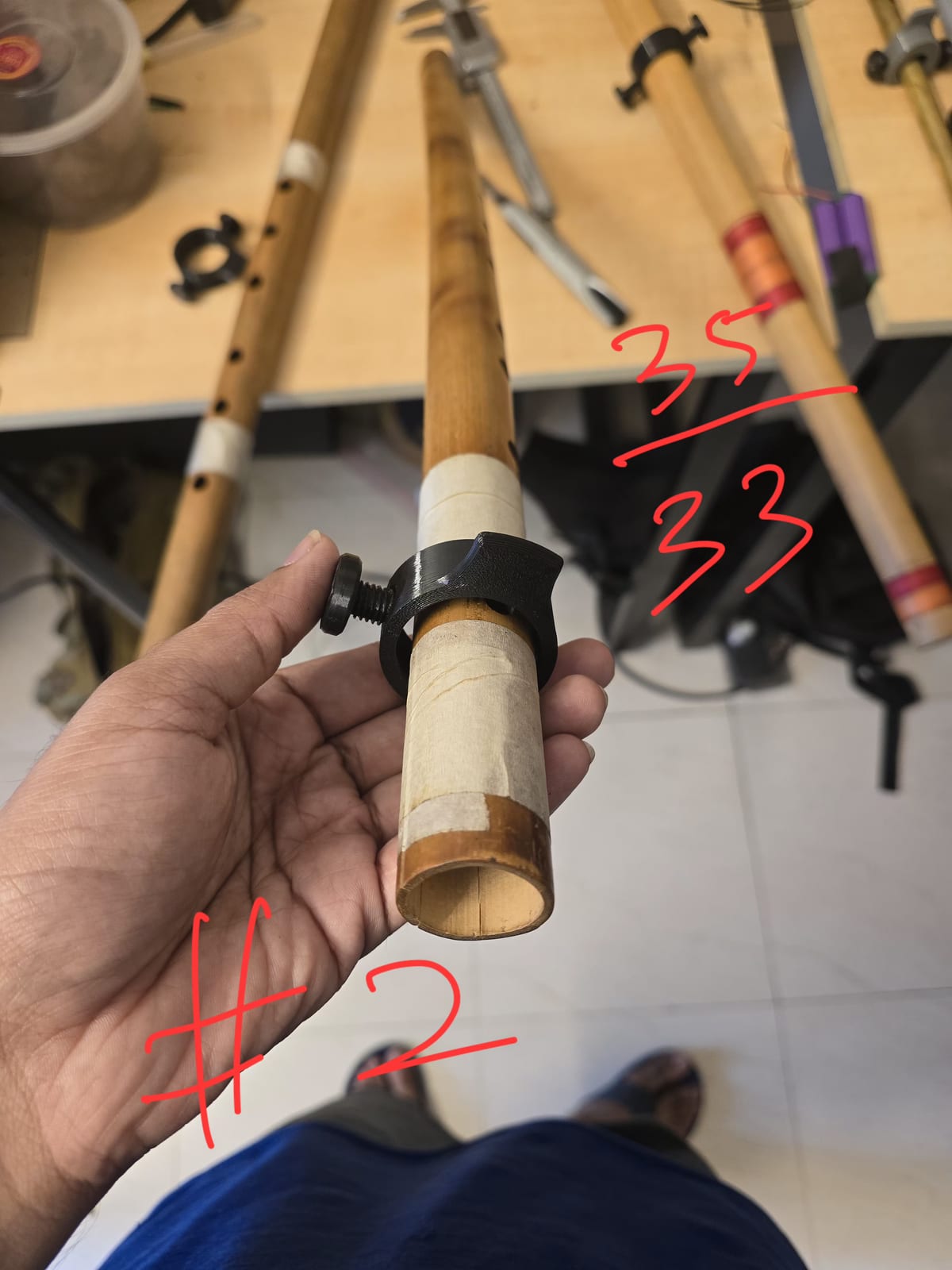
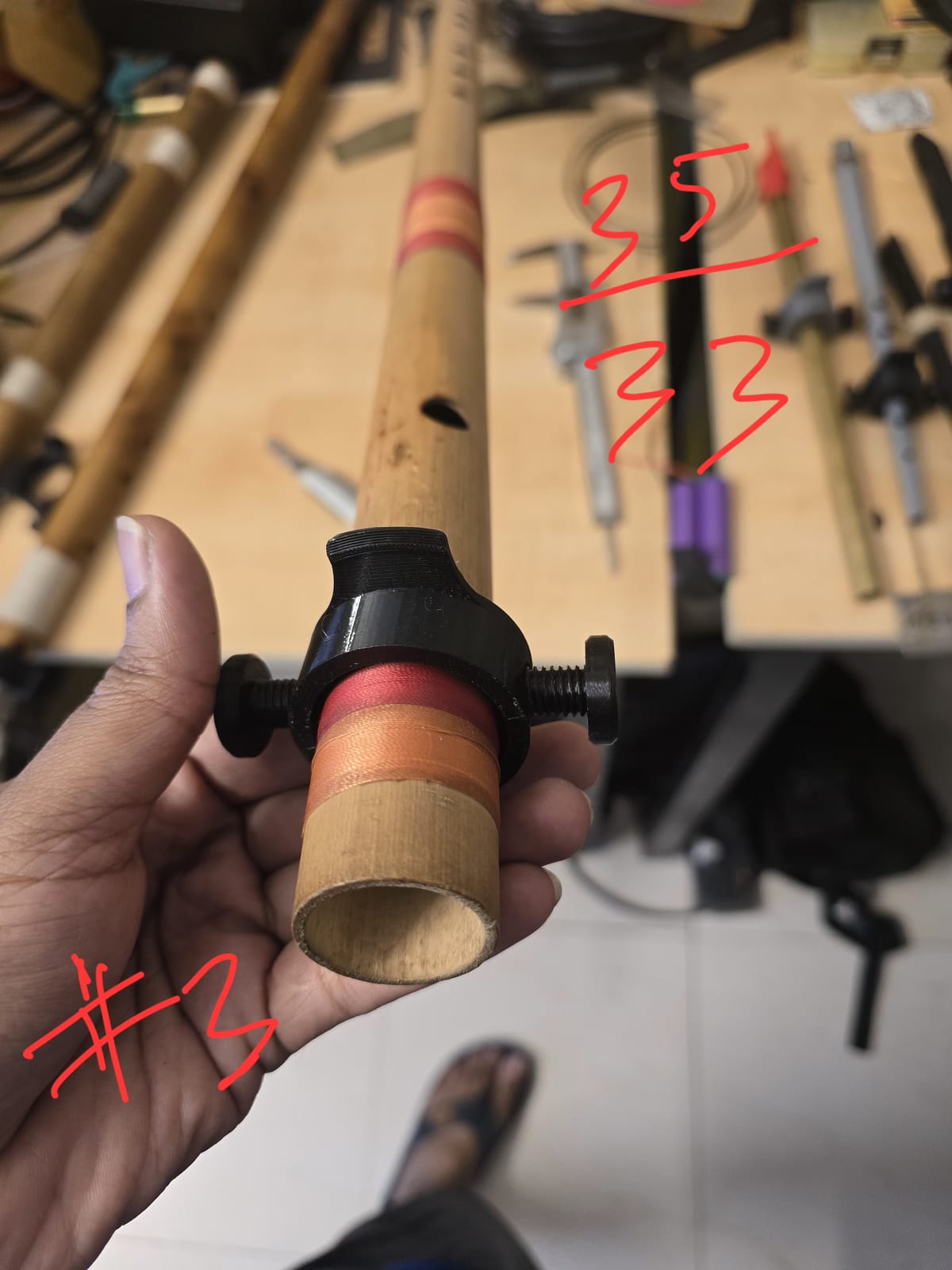
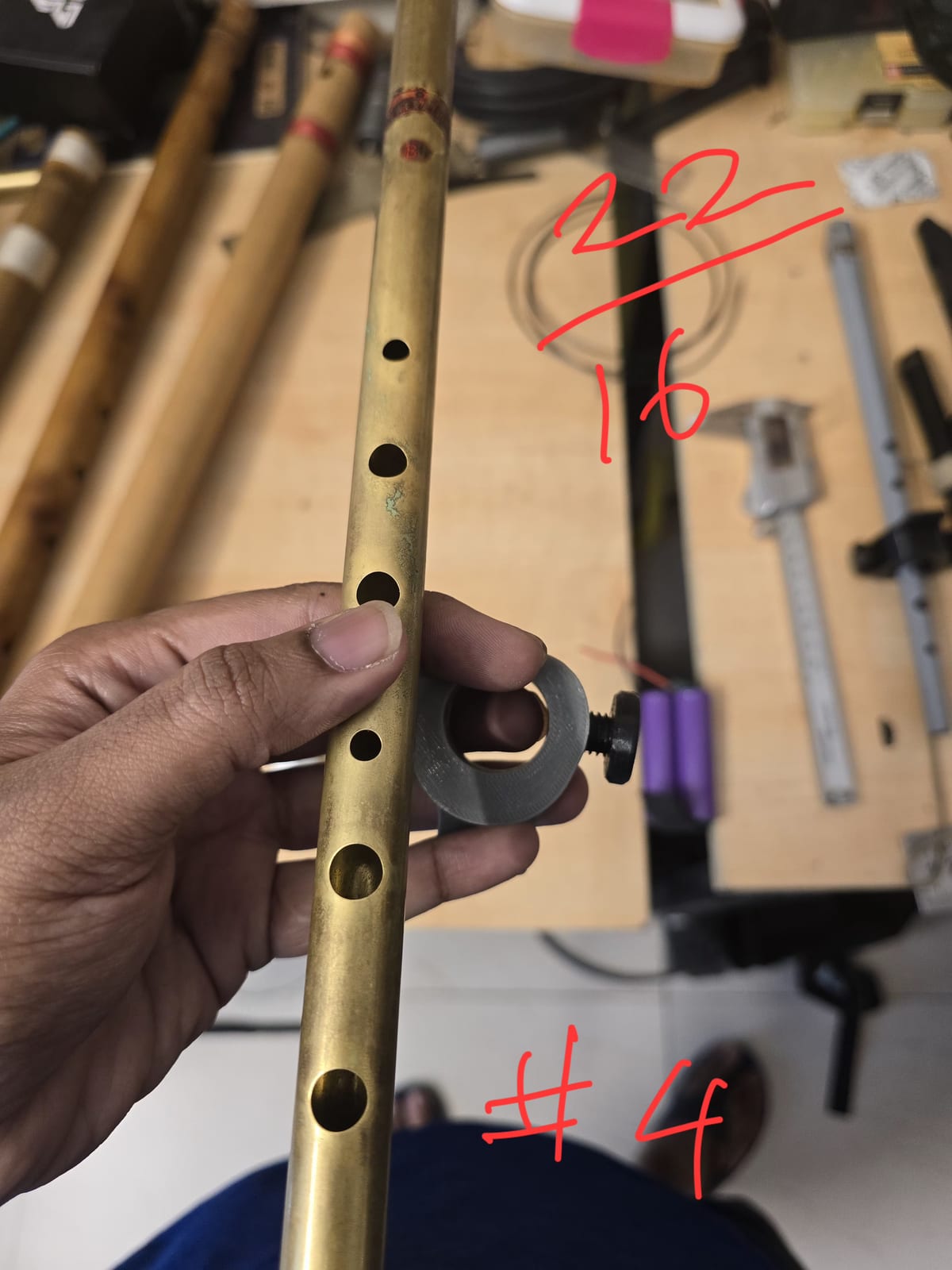
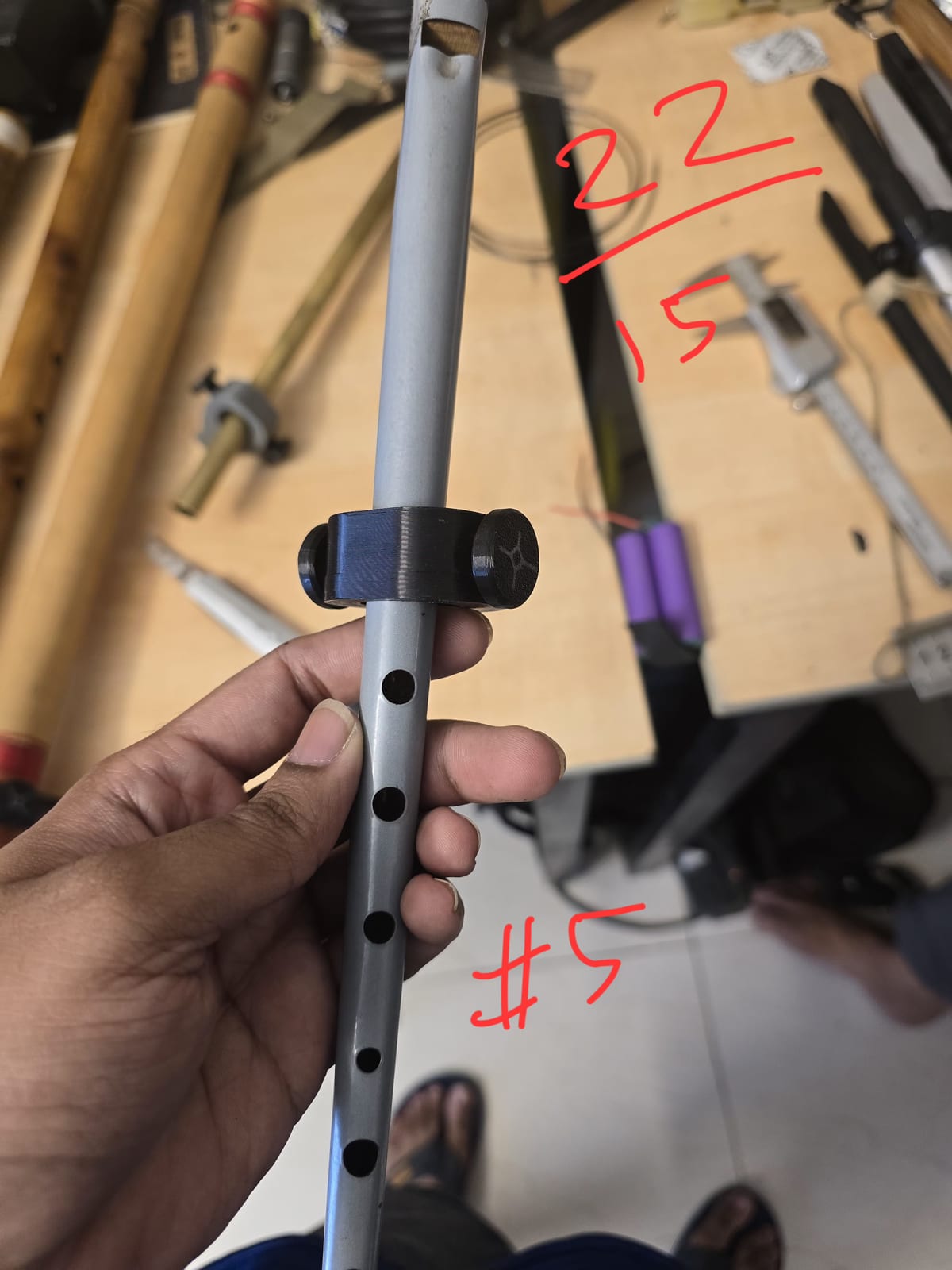
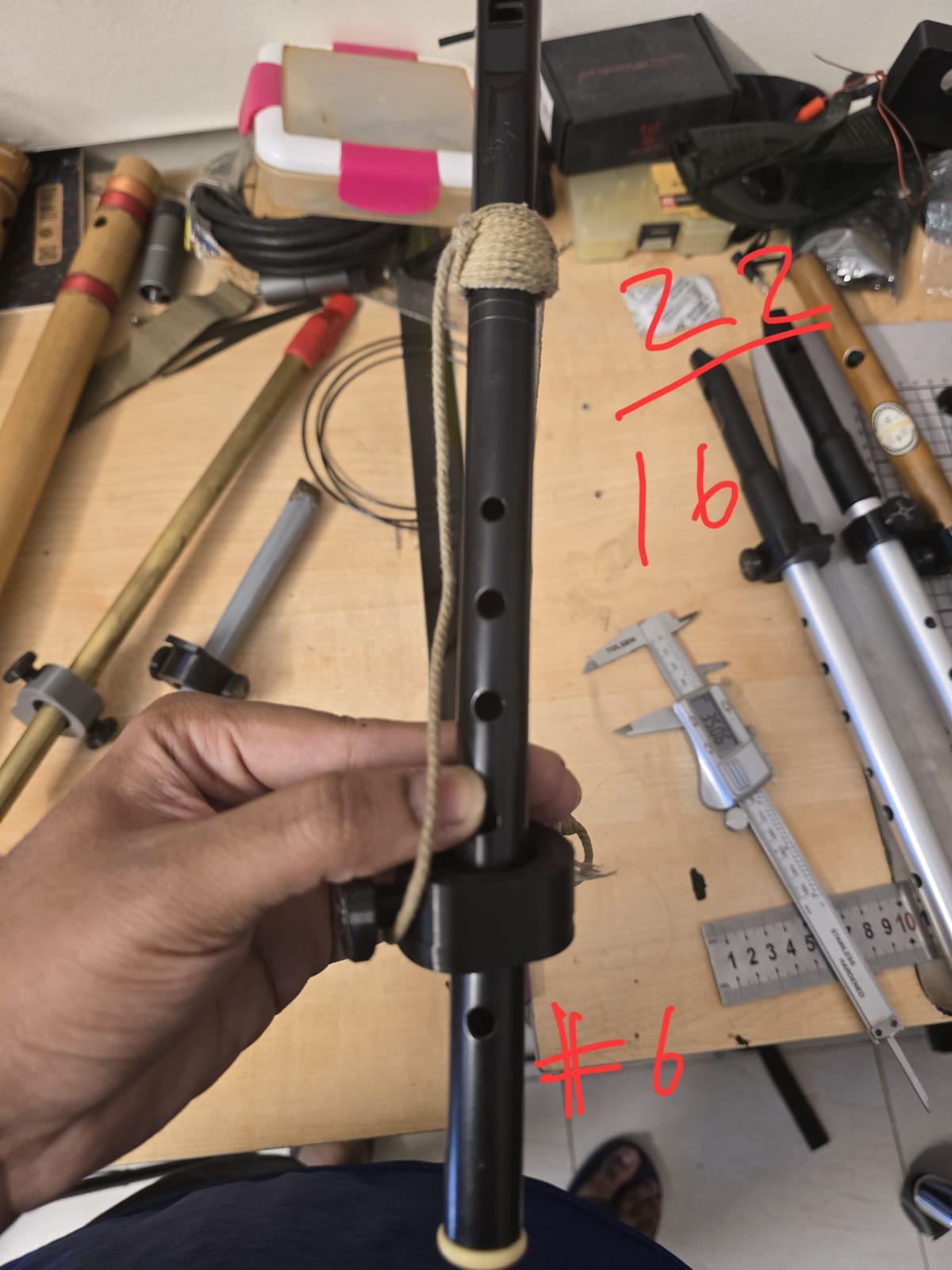
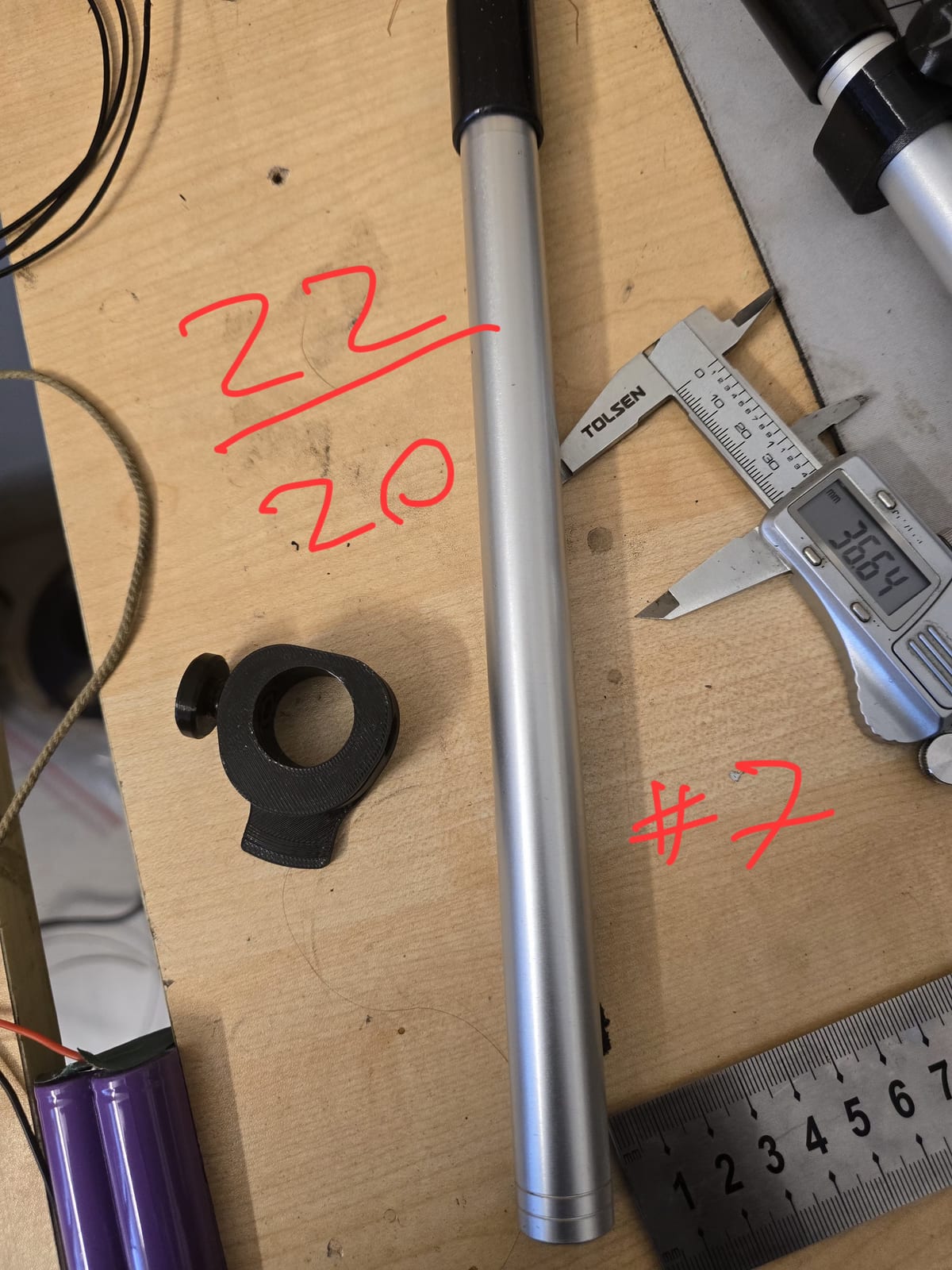
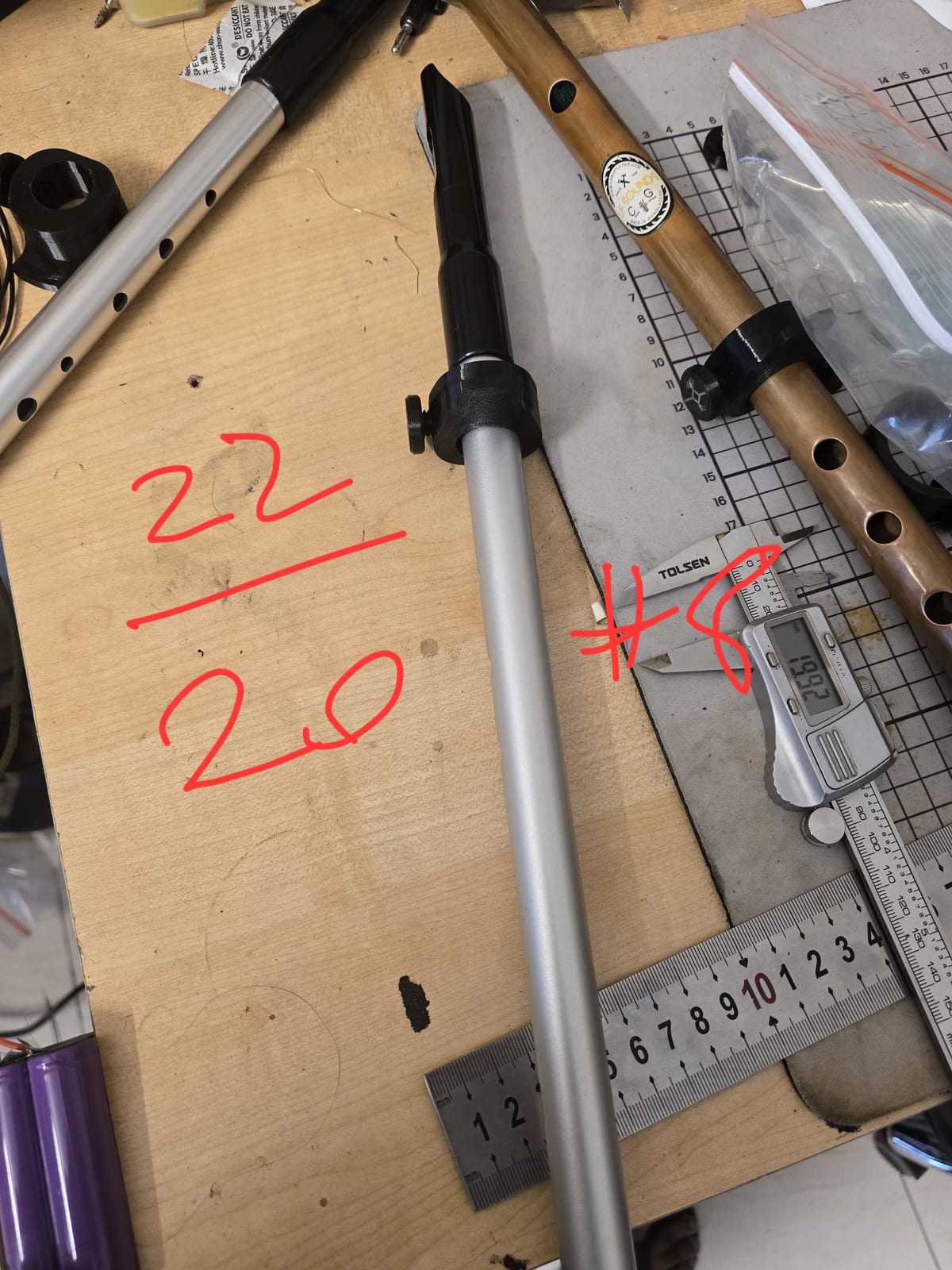
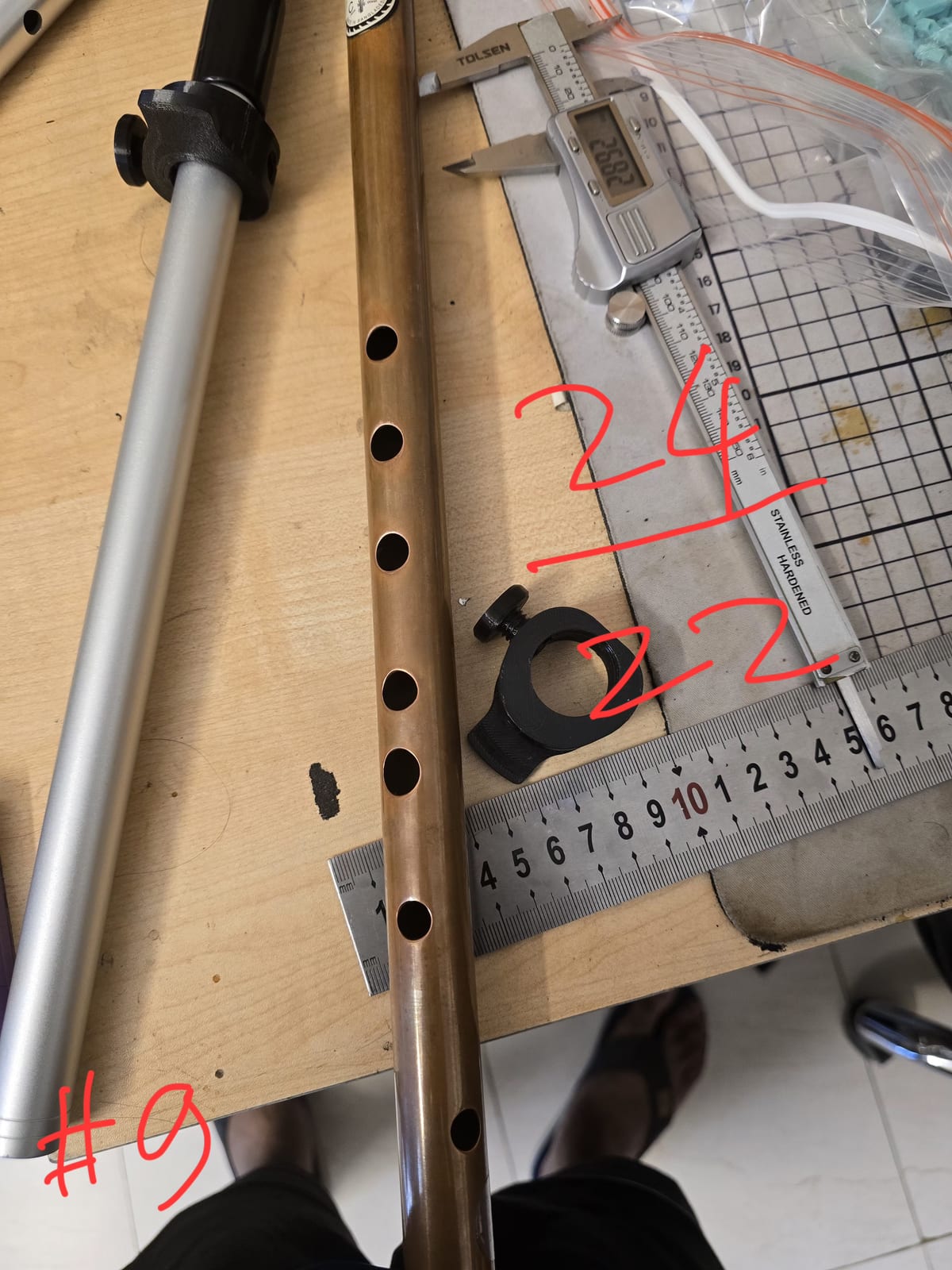
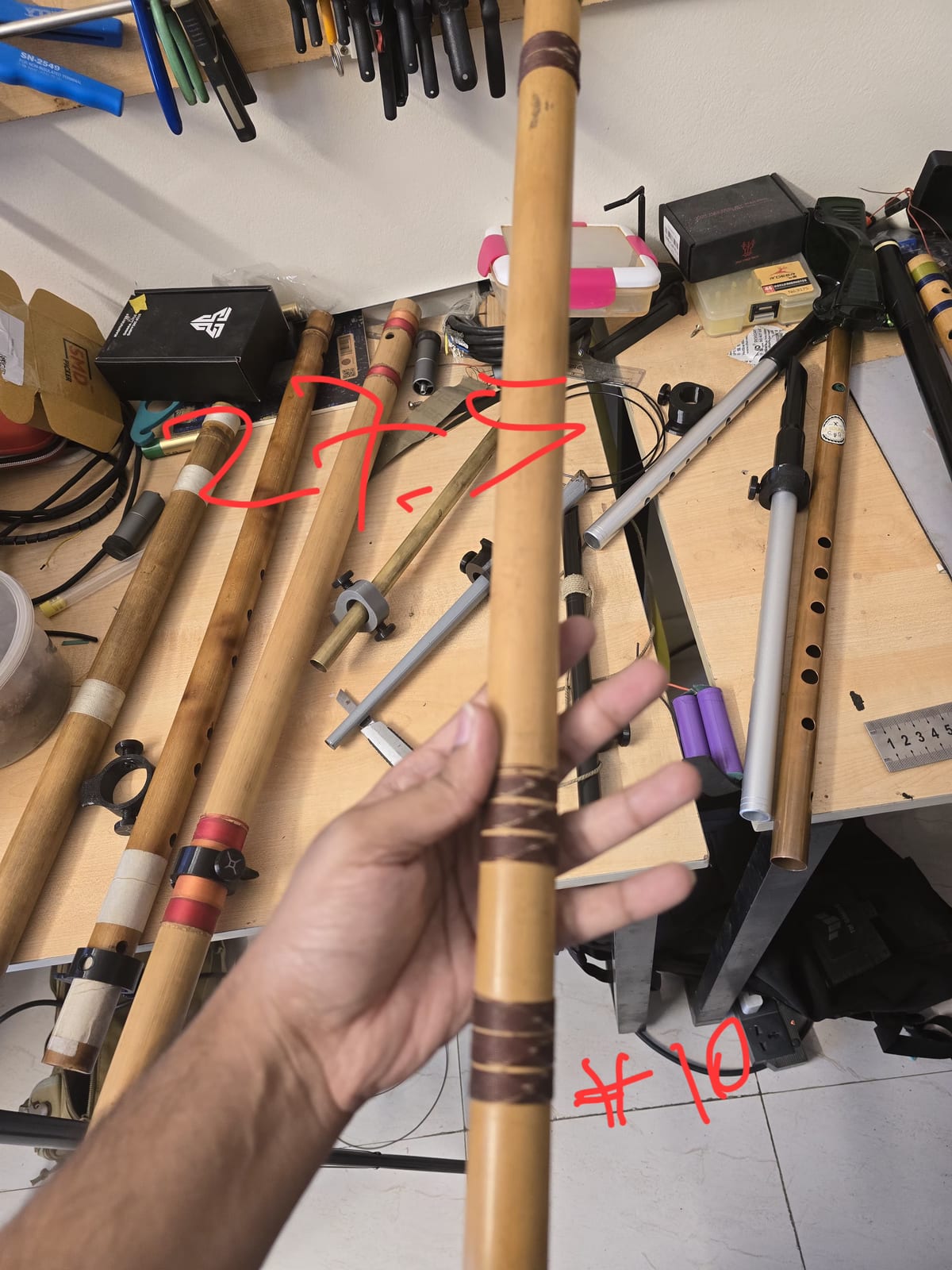
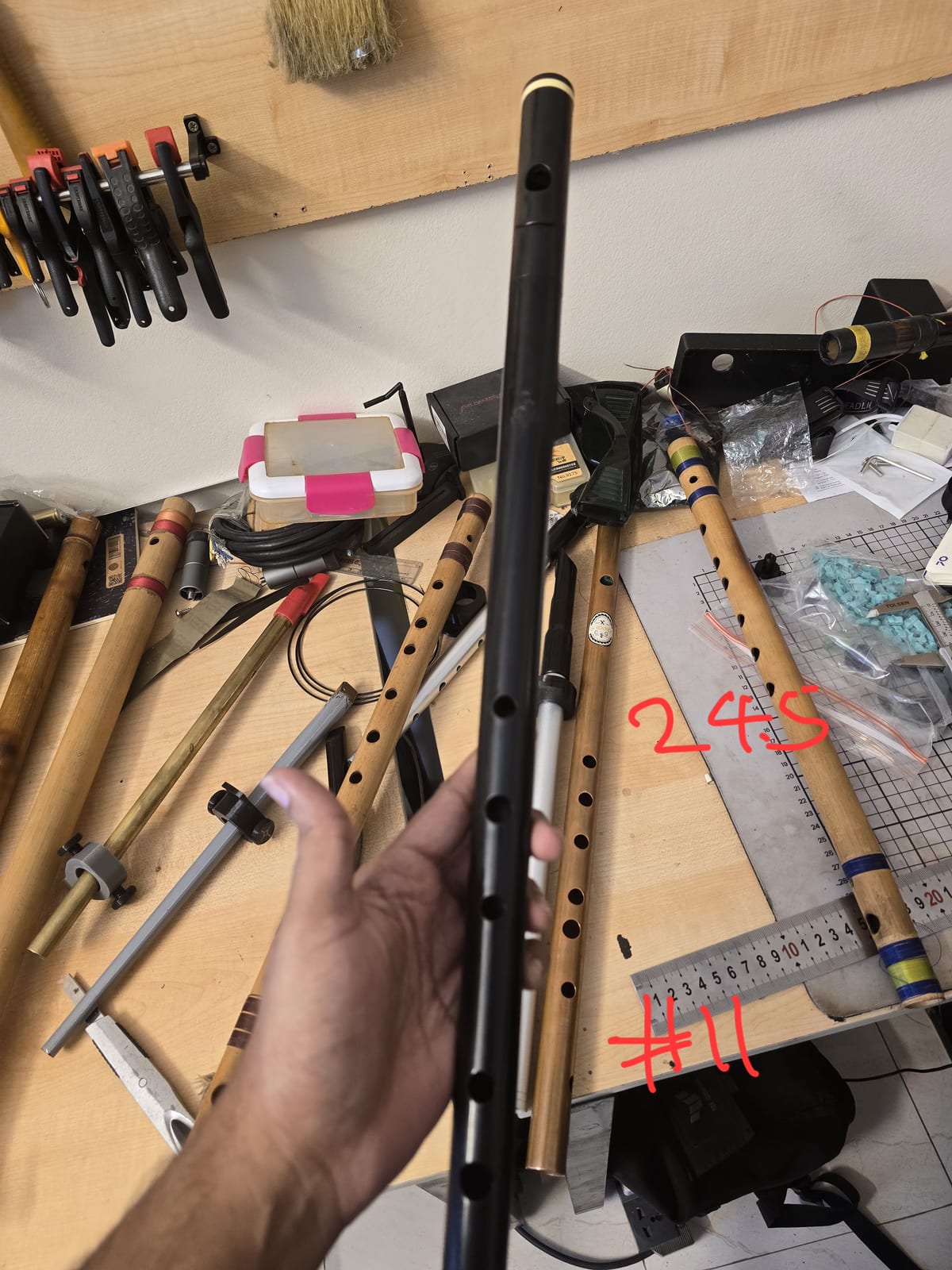
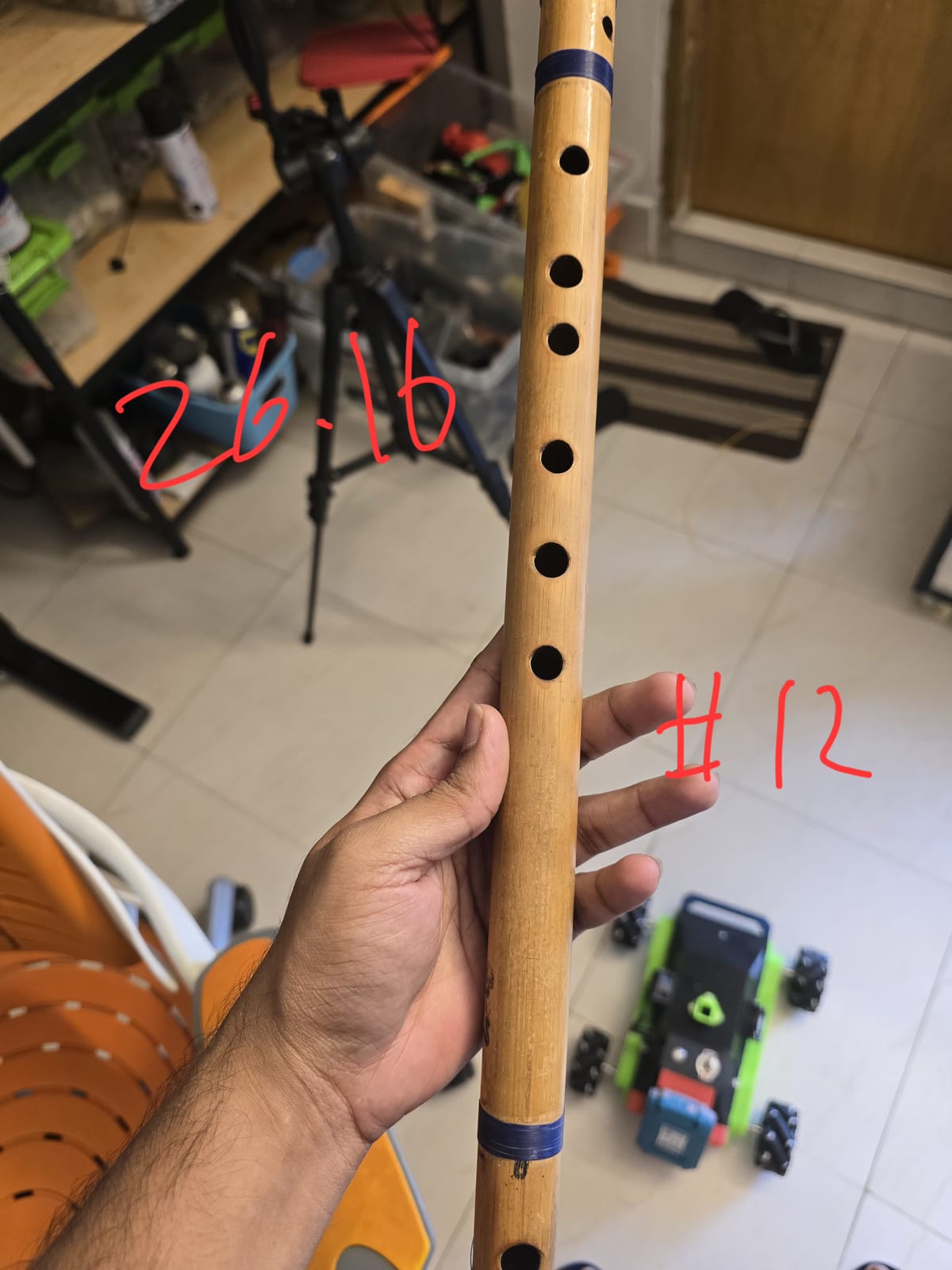
It is a crude system and it worked. The photo roll became the mapping document, which is worth more than it sounds: without it the set is fifteen anonymous black rings and a pile of flutes, and matching them up again means redoing the measuring.
One day
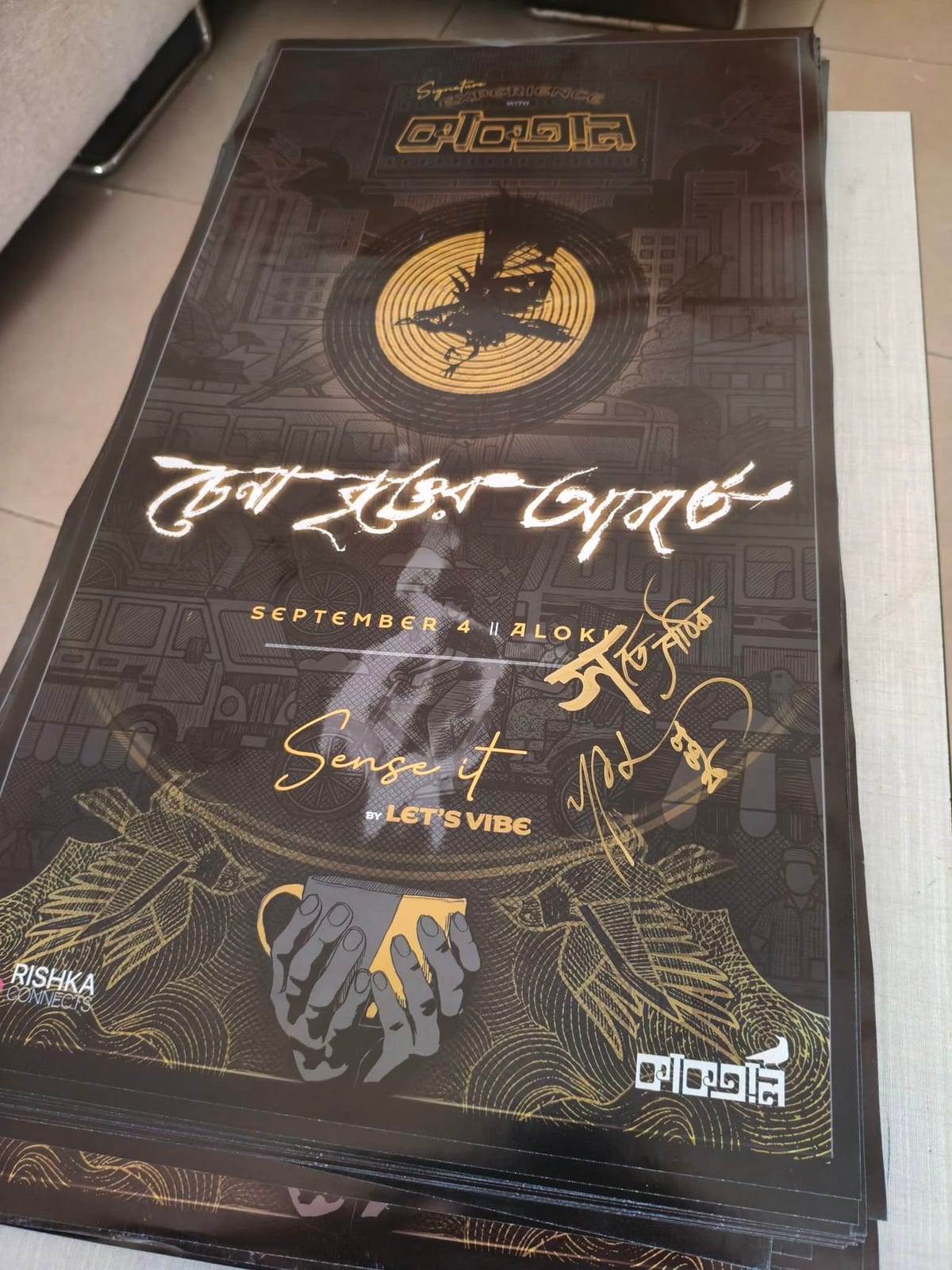
The deadline was a Kaaktaal show at Aloki on 4 September, and the whole job got one day. That timeline decides the method more than anything else. Every flute had to be measured before any modelling started, the clamp had to be one parametric model with the bore driven by a parameter rather than five separate files, and the prints had to be batched and running while the next size was still being drawn.
Outcome
The clamps held up through the show, and he is still using them. That is the whole test. A clamp that grips fine on the bench and works loose halfway through a set would have been a failure, and one day was not enough time to prove in advance that it would not happen.
The thing that might come next is a bag. Thirteen instruments from three feet down to a few inches, carried with the clamps left on them, and a way to get the right one out quickly between songs rather than unpacking the whole set. That is an idea at the moment, not a project.
If you have a B-6 and a flute
This is a common enough problem that it is worth spelling out what these parts are. A NUX B-6 or B-6 Pro expects a saxophone bell. If you play any transverse flute, a bamboo one, a metal one, a whistle, there is nothing on the instrument for it to hold. These clamps sit between the two: a printed split ring that carries the standard B-6 clip, and a soft TPU liner sized to your tube.
The bores here are 22, 24, 28, 30 and 35 mm with spacers down to 15 mm, which covers a good part of the usual range. If your flute falls between sizes the fix is a spacer at your diameter, not a new clamp, and that is a five-minute change to one parameter.
Instruments in the set
Most of Nazm’s flutes are handmade bamboo, which have no model number and no two alike. The shop-bought ones do, so if you play one of these, these clamps have been fitted to that exact instrument:
- Tony Dixon DX207, key of A — aluminium
- Tony Dixon DX207, key of G — aluminium
- Tony Dixon TB014 tenor flute — polymer
- Tony Dixon DX001 soprano whistle — polymer
- Generation whistle, key of Eb — brass
- Clarke whistle, key of C — tin
Measure yours anyway before you print. We recorded the clamp and spacer pairing per flute on the photographs, not per model, so I cannot tell you which pair a DX207 takes without going back to the pictures — and Tony Dixon have changed tube stock between production runs before. Callipers across the point where you want the mic, then pick from the table above.
All of it is published under CC BY 4.0: eighteen STLs and the parametric Fusion files are at samiul-hoque/nux-b6-flute-mount. Print the pair that matches your flute, or open the source and change the bore if it does not. Use them for whatever you like, including selling the prints, as long as you credit me.
Everything here was printed at 0.2 mm, PETG for the clamps and screws with four walls, TPU for the spacers. The four walls are the setting that matters: the clamping load runs straight through the wall either side of the screw.
If you build one, get in touch.